Leadership.
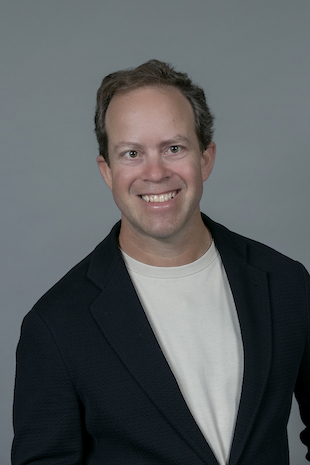
Russ Rosenzweig named Executive Director of the Institute
Russ Rosenzweig was named Executive Director of the Economic Damages Institute in August 2026. He was one of the pioneers of the expert witness industry and has decades of experience helping clients understand complex technical disputes and connecting them with the right experts and knowledge bases.
He founded the first expert witness search and referral firm in 1993 and led it for three decades, connecting thousands of attorneys, insurers and companies with specialized experts. His clients have included most of the largest law firms in the United States. That firm is Round Table Group, and the Institute discloses the relationship wherever a referral is offered.
The reason this institute is run from that history is that the underlying problem is the same one. Thirty years of matching specialists to disputes is thirty years of watching the wrong expert get hired for the right reasons, a familiar name, a prior engagement, a habit of purchasing, and of learning that the best person for an unusual matter frequently sits in a field nobody thought to search.
B.A., Northwestern University · M.B.A., University of Chicago Booth School of Business
Executive Director Russ Rosenzweig on why damages is not one field, how a dispute maps to the right model, and what Cournot does (9 minutes).
Read the full transcript
Lightly edited for readability.
Welcome to the Institute for Economic Damages. My name is Russ Rosenzweig, and let me tell you a bit about myself and this unusual and fascinating institute.
I have been working in the world of expert witness referrals and introductions for over 30 years. My whole career has been connecting litigators with very specialized experts. I've literally worked on thousands of matters over 32 years, and you name it, we've probably helped a client find a specialized expert. Across all those matters, all those years, there's been one pattern that has never really changed. A good half of the expert requests that we receive are for economic damages experts. And I've always loved when that happened. It's secretly my favorite topic that a lawyer can pick when they call upon us for an expert witness.
I think there are personal reasons why I'm so fascinated with this question of economic damages. It's the turning point in a dispute, where we're not talking about the meritoriousness of the claim, we're talking about how much it's worth. As an entrepreneur and a business guy, I've always been intrigued by what's at stake. What is this dispute really worth in dollars and cents?
Maybe I'm so fascinated because I studied the topic in college. I went to Northwestern and I majored in a cool, very specialized major called Mathematical Methods in the Social Sciences, and I paired that with economics. I also went on to business school and studied quantitative finance at the University of Chicago, which some say was where the science of economic damages was born.
I never really became one of those economists who do the economic damages work that I admire so much. I was only an A-minus, B-plus student, so all my friends and classmates who were the A students went on to become professors, and I decided to become the entrepreneur and just hire those people instead. But those are some of my favorite people in the world: the professors and other economists and experts who can do this work, who can perform the damages analyses. I've been fascinated by their models my whole life, because my whole major in college was different kinds of quantitative models and figuring out what kind of situation they apply to.
The main purpose of this video is to tell you what three decades of helping lawyers with their economic damages requests have taught me. The biggest mistake that litigators make, and the biggest mistake that litigation financiers also make, is treating economic damages as one field, as one specialty. "Find us a damages guy," they'll tell me. But there is no such thing as an economic damages person. There are actually 118 distinct damages models at my last count. Lost profits is not a business valuation. Reasonable royalties are not event studies. A measured mile is not a life care plan. Each one of these 118 economic damages models fits a very particular kind of dispute, a very specific kind of case. It demands particular records and gets attacked by opposing experts in a very specific way.
The rigor, the secret to winning when it comes to economic damages, is this mapping: connecting your dispute to the correct damages models and, of course, finding the perfect and most appropriate experts to help you, who have spent their whole professional careers working on the specifically relevant damages model. That's what we have built here at the Institute. Our institute articulates, expresses and makes known publicly all 118 of the models. It tells you what each one measures, what it requires in advance, and how it gets attacked and overturned.
My favorite part of the Institute, really the reason I agreed to become the Executive Director of it, is that we have built an AI concierge named Cournot, for the first economist to treat these questions as mathematics rather than opinion. We've built this concierge with great passion, skill, technology, rigor and vigor. It's much better than any chatbot you've ever engaged with. Do not run your economic damages questions by a generic old chatbot. Run them by Cournot instead. He's trained on all 118 models, he's trained on every mathematical equation I learned in my MMSS program and in all my finance classes, and he'll walk you through the situation you're facing. He'll understand the dispute and the complaint, and he'll tell you which models your facts can actually support. It's not going to compute the damages for you, but it will do something even better. It's not going to tell you exactly what your case is worth, but it'll tell you which model you need to employ to get that answer.
And behind the scenes, when you've figured all that out, when you're ready for the expert: well, if nothing else in the world, I know every economist who works on every single one of those 118 damages models, and I think that's where we can add a lot of value. The Institute will help you figure out the kind of model you need. And then there is our expert witness company, Round Table Group, which I co-founded 32 years ago. I even recently wrote the book about our exploits in the wonderful world of expert witnesses and damages calculations. So it's kind of a match made in heaven.
The Institute is really passionate about helping you figure out what economic damages models you need to employ. We have a ton of content, all kinds of great articles and citations about this wild and wonderful, intellectually interesting world of economic damages. We're only paid by clients, never by experts, and it's our passion to help you ensure you have the best and most qualified experts working on the correct and most appropriate economic damages model for your situation.
So go ahead, come give it a try. Describe your dispute to Cournot and let's see what your facts can support. I hope you enjoy the Institute.